We need your help to keep this website free. You can
It’s funny how our perception of certain regions completely misses the reality on the ground. When most people think of Central Asia—and Mongolia in particular—they usually picture vast, untouched steppes and nomadic traditions. But the modern truth is, it’s an incredibly hyper-connected, mobile-first society. The way users there interact with digital tools is actually way ahead of the curve. They don’t really bother with aimless scrolling through official app stores to find new utilities or entertainment. Honestly, who has the time for that anymore? Instead, the discovery of new software has shifted almost entirely to social media feeds, transforming platforms like Facebook and YouTube into the primary engines for digital exploration.
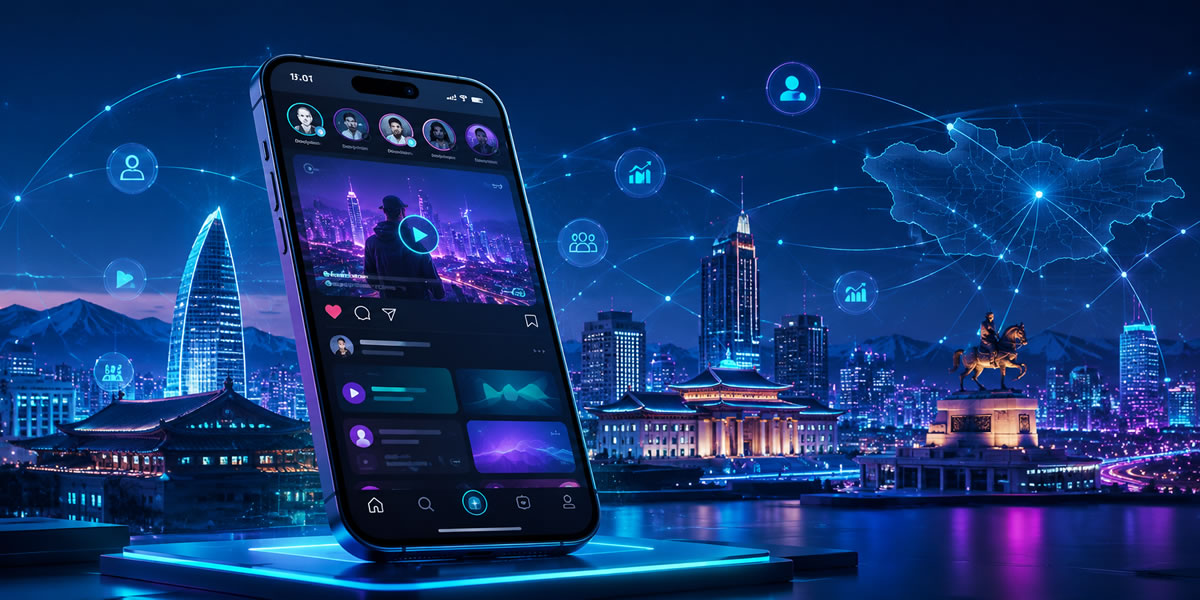
The driving force behind this massive shift is a rapidly growing wave of local tech influencers. These creators have basically become the internet’s unofficial quality control team. Traditional corporate advertising doesn’t work the way it used to, largely because people are incredibly tired of heavily edited screenshots that overpromise and underdeliver. Today, a user wants to watch a real person physically interact with the software before they even consider hitting the download button. When a prominent local creator showcases a platform with a genuinely seamless interface, the resulting curiosity means search volumes for specific entities like MelBet Mongolia spike almost instantly, proving that authentic creator validation beats standard ad campaigns every single time.
Trust is the New Digital Currency
Let’s be real for a second—nobody wants to waste their mobile data or device storage on a poorly optimized application. In a market where digital efficiency really matters, consumers rely heavily on word-of-mouth. Or, more accurately, “word-of-screen.”
Creators based in tech hubs like Ulaanbaatar are building massive, highly engaged audiences simply by being brutally honest. If an interface lags during a heavy load, they call it out. If a menu system is unnecessarily complicated, they show their frustration live on camera. This kind of raw transparency builds a very specific type of bond—essentially a modern form of parasocial interaction, but one where the trust actually has to be earned. It’s an unspoken agreement between the influencer and the viewer: I won’t recommend garbage to you. So, when these creators finally do put their weight behind a piece of software, the adoption rates go through the roof.
The Cinematic Shift in App Reviews
It’s not just about what these creators are saying, though. It’s entirely about how they package that information. We are seeing a massive evolution in the visual presentation of digital reviews across the region.
Gone are the days of shaky, low-resolution screen recordings. Today’s top Mongolian tech influencers are adopting highly sophisticated visual strategies to capture audience attention. They are leveraging cinematic aesthetics in their videos—playing with lighting, smooth b-roll, and ultra-crisp audio. Even their packaging has changed. Many have shifted toward “zero-text” thumbnails, relying purely on striking visual intrigue rather than cluttered clickbait titles to drive views. By making the technology look incredibly premium, they elevate the perceived value of the software under review.

The Old Way vs. The Creator Way
If you want to see exactly why the traditional app market is losing its grip, you just have to look at how different the user journey has become on a global scale. This isn't just an isolated trend happening in Central Asia. We've been observing almost identical behavioral shifts across Western markets, too, especially when you analyze how social networks are reshaping mobile entertainment habits and digital discovery models. The contrast between the old corporate search route and the new community-led approach is pretty stark when you actually lay it out side by side.
What Exactly Wins the Mongolian Market?
So, what are these influencers actually praising? What makes an application survive the intense scrutiny of a video review and make it to a user’s home screen? It usually comes down to a few non-negotiable architectural choices:
- Flawless Localization: This doesn’t just mean a lazy machine translation into Cyrillic. It means culturally relevant formatting, proper date/time structures, and customer support that understands the local context.
- Data-Light Architecture: Applications must run incredibly smoothly without draining background data. Heavy, bloated software is usually deleted within the first 24 hours.
- Fluid Navigation: The UI needs to be intuitive. If a user has to tap more than three times to find the core feature they are looking for, the design is functionally broken.
- Dark Mode Integration: It sounds like a minor aesthetic preference, but it’s actually a huge retention factor. Modern users expect native dark modes to reduce eye strain during late-night scrolling.
The Next Era of Digital Adoption
Things are moving fast, and the old methods of pushing software to users have pretty much lost their edge permanently. People want authenticity. Before letting a new icon take up space on their phones, they want someone they trust to show them that it actually works. This pivot toward creator-driven downloads highlights a beautiful reality: community consensus is infinitely more powerful than corporate marketing. As long as developers focus on building genuinely polished platforms, the creators will happily do the heavy lifting of distribution. The crowd is running the show now, and honestly, the digital ecosystem is much better off for it.