We need your help to keep this website free. You can
Online video content has kinda become a big deal for entertainment, learning, and general knowledge. A lotta people regularly watch short clips through social media platforms, streaming sites, and content-sharing networks. But still, there are times when users want to keep videos stored away for later, offline, like when they’re without service. It could be so they don’t get stuck buffering, to conserve mobile data, or maybe just to open content without an internet connection. Because of that, video downloading has become more common, almost expected.
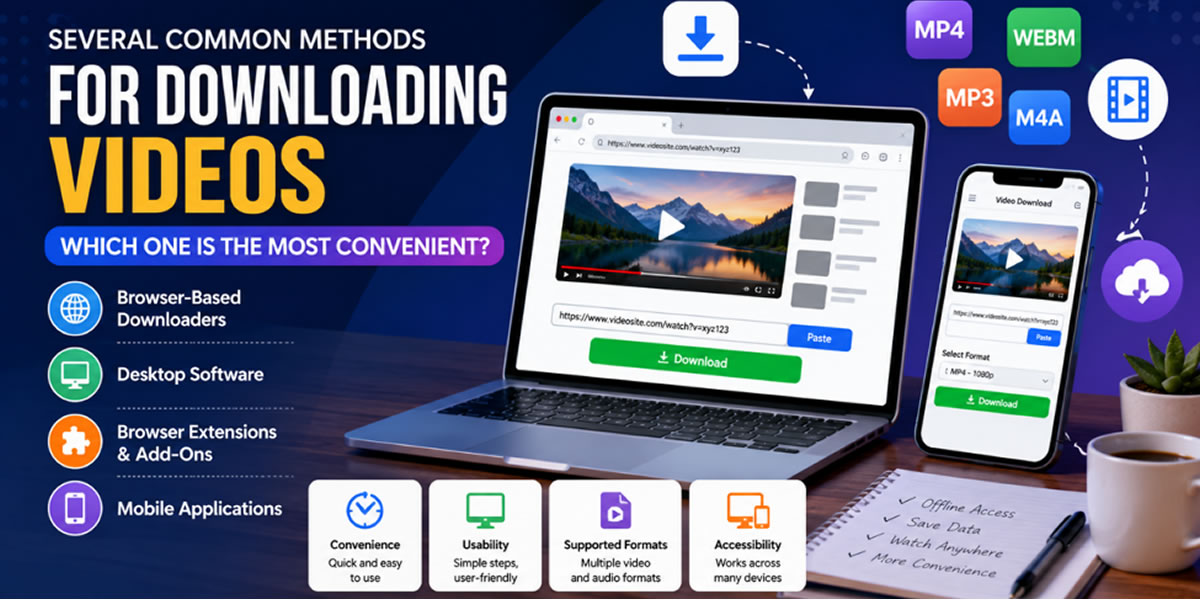
Right now, it feels like there are a bunch of ways to download videos, and each one has its own kind of comfort level, usability, the file formats it can really handle, and also how accessible it is. When someone can sort out the different options, it becomes a bit simpler to see which method actually fits what they want in everyday use, not just in theory.
Why People Download Videos
There are lots a few reasons why folks decide to download videos instead of streaming them again and again. Having offline access is probably one of the biggest motivations, as people don’t always want to rely on the net, or they prefer convenience. Downloaded videos can be watched while travelling, in areas where the internet signal is weak, or whenever users want to dodge heavy data consumption .
Also, some users keep educational tutorials, slide presentations, or even reference materials for later. Because internet availability is not always there, a local copy gives more flexibility, and it feels more convenient overall.
Browser-Based Video Downloaders
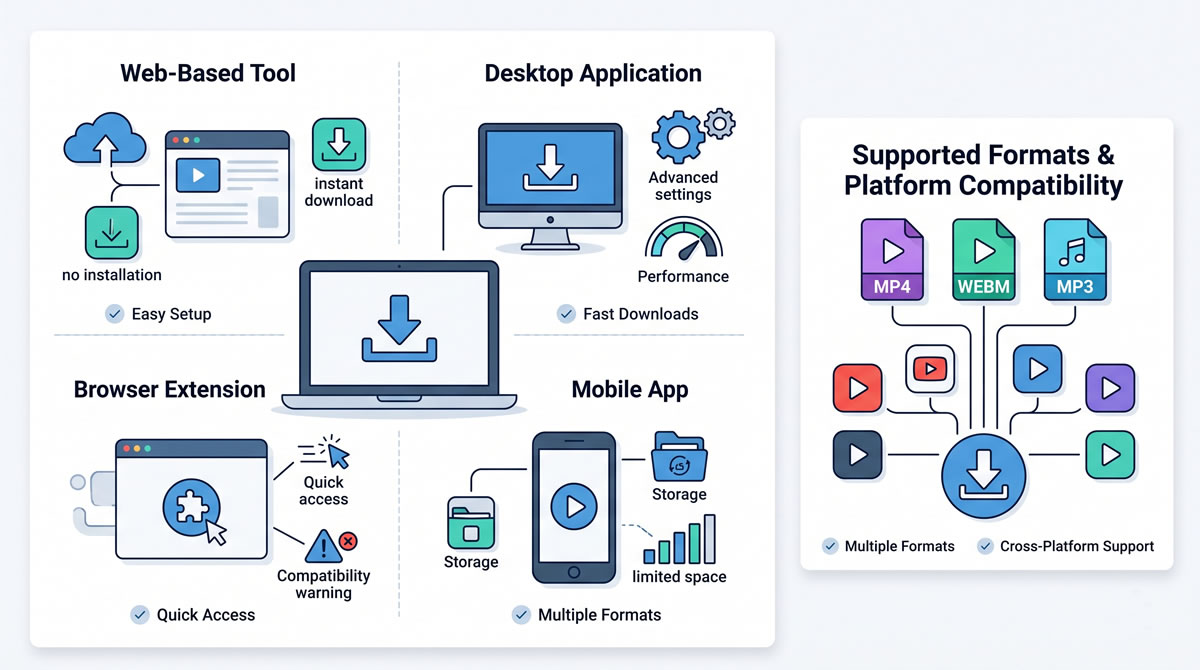
One of the most popular ways for downloading videos is with browser-based tools; basically, you can do it right from your web browser. These kinds of solutions let people pull content straight through the browser, so there’s no need to install extra programs or stuff like that on the device.
Generally, it sounds quite easy. The video URL gets copied, put into the downloader program, the desired format is selected, and then the start button is clicked. As most of the process remains online, those browser-based apps are compatible with all major operating systems, such as Windows, macOS, Linux, Android, and even iOS.
A large number of people find it easier to use Baixador de vídeos, which works from within a browser, as there is no need for downloading software and doing updates time to time. For people who just need a quick solution without any technical hassles, it's the best option available, I guess.
Desktop Software for Video Downloads
Desktop applications have been around for ages and still feel like a top choice for more advanced users, I guess. These programs often bring extra perks like batch downloads, scheduling the download at a set time, doing format conversion, and giving deeper levels of customisation, too.
A clear edge with desktop software is that it can handle huge numbers of downloads fairly efficiently. If someone regularly grabs videos, they might really value the extra grip and control that these tools provide, not just the basics.
Nevertheless, there are also certain drawbacks. The application needs to be installed, updates should be made, and there is a risk that some programs will consume much of the system’s power. Hence, regular users can find web-based options more comfortable for everyday work because they are easier to use without installing them each time.
Browser Extensions and Add-Ons
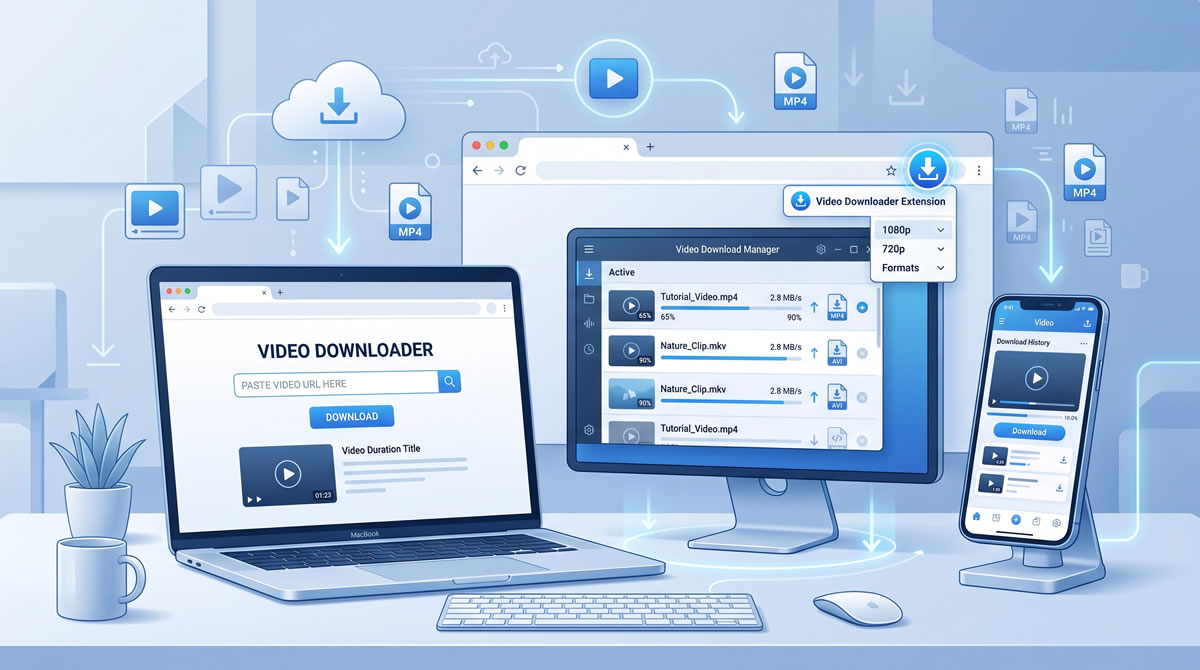
Another pretty common approach is through browser extensions. These tools get wired right into your web browsers and let people download videos while they’re still browsing.
They can feel convenient too, because a lot of them offer one-click downloading, like directly from the page itself. Instead of copying, pasting a URL, and all that, users can just download the content straight from supported sites.
Still, even with the convenience, browser extensions may run into snags. Sometimes, a browser update or platform restrictions can mess with how things work. And also, not every extension works with every video platform, so it can end up being less useful for certain people.
Mobile Applications for Video Downloads
Mobile apps can be kinda another solution for folks who mostly access everything through their phones and tablets. These applications are made for mobile devices in particular, and they usually have a more user-friendly interface, so it feels less like a chore, more like a natural flow.
Mobile downloaders can also be helpful when users often save videos on the move. But app availability can change a lot, depending on the operating system and on local restrictions. Plus, some apps need permissions that not everyone feels comfortable giving.
Also, storage limits on mobile devices can quickly become a real headache, especially when downloading bigger video files. So, users should take a look at how much free space is left before counting on mobile download solutions too much.
Comparing Convenience and Usability
When you’re judging various video downloading approaches, convenience is usually one of the top things, honestly. Most people want options that are pretty low-hassle, and still let them grab downloads fast.
Web-based configuration always seems like the most usable one because there is no need to go through the installation process. Users can use the service on almost any device that has access to the Internet, and indeed, the lack of complexity removes many barriers. Consequently, the user can start the video downloading without any difficulties associated with the setup procedure.
While desktop applications provide better configuration options, they can require additional effort to be properly configured and launched. The same applies to browser extensions, which also have some weird compatibility issues. At last, mobile apps can have certain limitations connected to the availability of storage space and platform limitations.
Supported Formats and Platform Compatibility
Supported formats kinda matter a lot for the whole user experience, you know, overall, like it affects what people actually do. Different users also have their own requirements depending on where they plan to watch the downloaded videos and how they intend to view them later on.
A lot of modern video download tools now support mainstream formats like MP4, WEBM, and several audio formats. When there are many format choices available, users can pick the most suitable file type for their devices and for different usage scenarios, basically.
Platform compatibility is just as crucial, too. If a tool can download social media videos from more than one platform, it tends to feel more flexible and convenient. People usually prefer a single solution that works across various websites, instead of having to get separate tools for each one, honestly.
Accessibility Across Devices
Accessibility is getting more and more important in today’s multi-device world. People might hop between desktops, laptops, smartphones, and tablets, all in the same day, kind of without thinking too much. Browser-based solutions kind of shine here, mostly because you can reach them from almost any device, without that extra install step. With that kind of flexibility, people can keep a fairly consistent experience no matter what operating system they happen to be running, like it stays the same or close enough.
Services like VidsSave have also been getting attention, mainly due to a browser-driven workflow and support for video downloading across different platforms. When they focus on accessibility along with convenience, these approaches make the whole downloading task feel simpler for a pretty wide set of users.
Conclusion
There isn’t really one single video downloading approach that works perfectly for everyone. Like, desktop software, browser extensions, mobile apps, and web-based downloaders all got their own small strengths, you know, but still, if you kinda put convenience first and you really care about accessibility plus general ease of use, the solutions that run in a browser usually feel the most direct.
They avoid the whole installation hassle, they can work across multiple devices, and the downloading steps end up being way simpler. So in the end, the “best” option depends on each person’s preferences, but people looking for something practical and easy to reach often land on browser workflows because they’re among the most convenient choices around today.