We need your help to keep this website free. You can
Remember what going online used to feel like? It was an event. You sat down at a bulky desk, listened to the modem screech for a minute, and checked your email. Nobody was really worrying about background data harvesting back then.
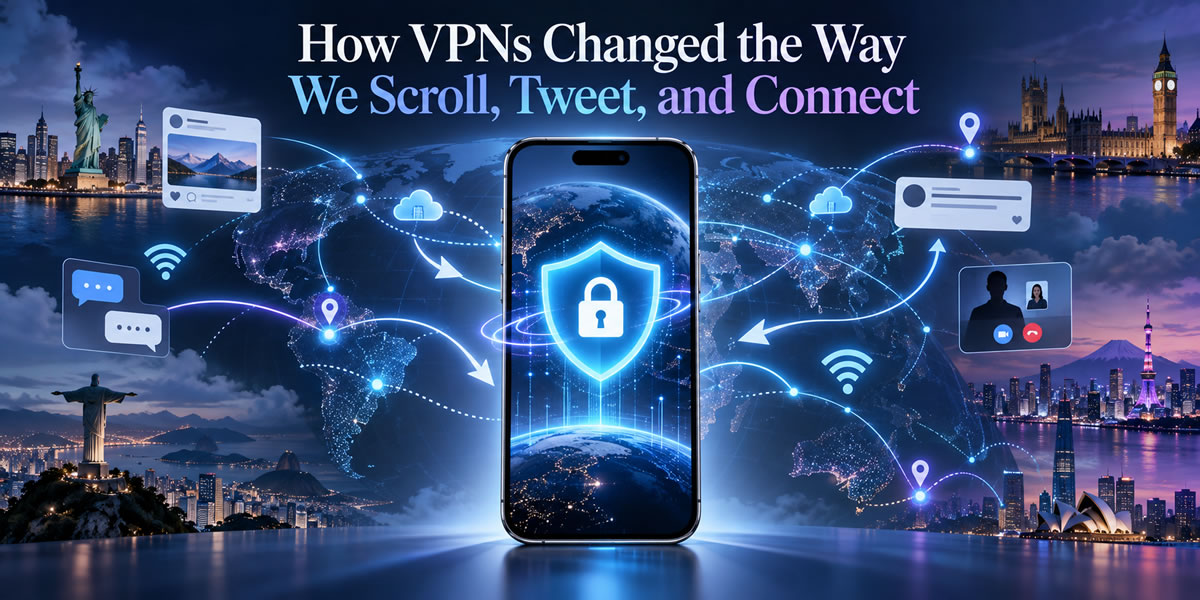
Today, we basically live inside our phones. We scroll Instagram while waiting for a coffee. We argue on X (or Twitter, whatever you prefer calling it) during commercial breaks. But somewhere along the line, the internet got incredibly creepy. We essentially traded our privacy for the convenience of free apps.
And honestly, that sudden realization is exactly why VPNs stopped being a boring IT requirement for corporate office workers. Now? Half my friends have one installed right next to their social media apps.
The Social Data Goldmine
The web we use right now is massive. Billions of people are constantly connected. And a terrifying amount of that daily traffic runs straight through platforms owned by just three or four massive tech giants.
Think about the last time you traveled. You probably connected to a completely unsecured, password-free Wi-Fi network at the airport to upload a story or check some Facebook videos. Your unencrypted data was just… sitting there out in the open. It’s an absolute playground for anyone wanting to hijack a session.
But hackers aren’t even the biggest issue anymore. The platforms themselves are. Meta tracks what you look at long after you close their app. Algorithms build frighteningly accurate profiles based on your location data. People finally got tired of it. They realized they needed a buffer between their phone and the network.
No More IT Degrees Required
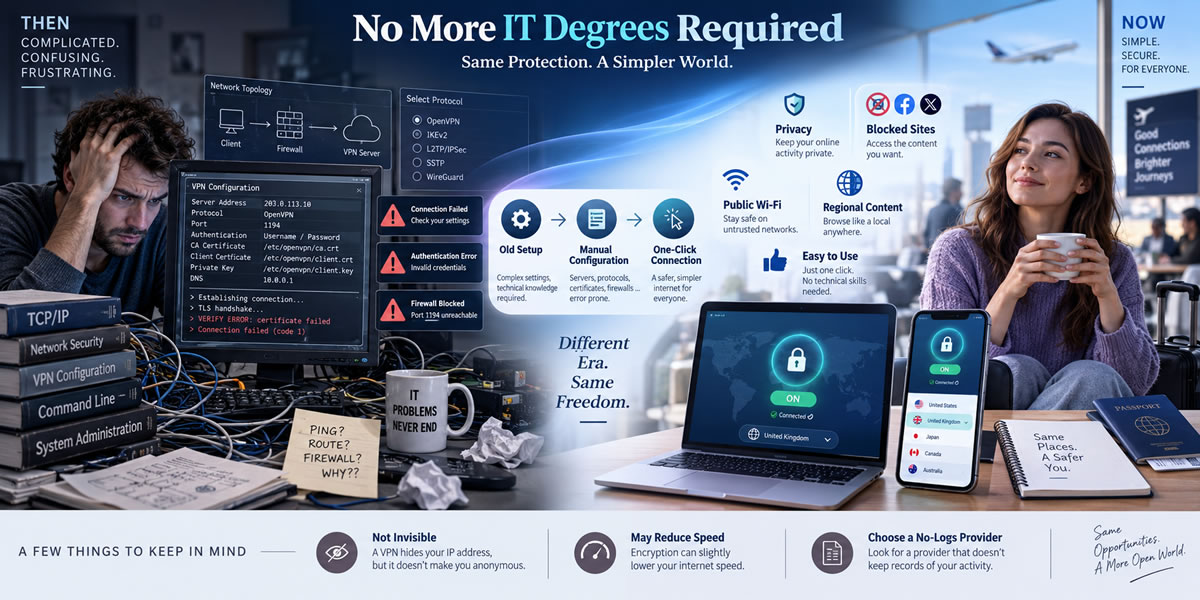
Years ago, I recall attempting to configure a virtual private network to perform work remotely. It was terrible. You had to manually enter server addresses, battle your firewall, and pray that the connection did not get dropped.
All of that stuff is entirely obsolete now. You don't even need to know computer science anymore. Now people download software at an airport to get around a TikTok ban. Establishing a VeePN secure connection is actually a good example of that kind of change. You install the software, press a button, and the software does its thing in the background automatically.
When Do We Actually Need It?
So, outside of general privacy, when are normal people actually using these things for social media? A lot, actually.
- Beating the bans: Have you ever traveled somewhere and realized X or Instagram is suddenly blocked by the local network? Yeah, bouncing your connection through another country fixes that instantly.
- Dodging the trackers: Keeping ad networks from following your digital footprint across every single website you visit.
- Coffee shop paranoia: Logging into your accounts on sketchy cafe Wi-Fi without worrying about who else is monitoring the router.
- Trend surfing: Accessing regional content. Sometimes you just want to see what’s actually trending in a different part of the world.
However, there is no such thing as a free lunch, and one has to be realistic about it. A VPN cannot serve as some kind of cloak that would make you invisible.
If you switch on your encryption and log in right away to your personal Instagram page, then it is quite clear to Meta that it is you since you literally give them your profile. Plus, passing your internet traffic via some server located far away from you will most likely slow it down. Thus, you can experience a slight delay when uploading a huge 4K video.
Trust is also another aspect to consider since you literally fire your internet service provider and trust your data to some third party. Thus, you have to make sure that your chosen provider adheres to a strict no-logs policy.
The Bottom Line
Back then, ten years ago, people didn’t care who was looking at their traffic. These days, it’s just one more thing on the checklist. Internet isn’t getting any less commercial or surveilled in the near future. But getting some privacy back, just having control of your connection before launching an app—this is definitely a good start.