We need your help to keep this website free. You can
There is a quiet shift happening in how people use the internet. The online world used to feel like a place where anyone could download files, keep copies, and store whatever they needed. Today, it looks very different. Streaming platforms, subscription services, and cloud tools have made access simple and smooth, but they also reduce the role of the user in owning and managing what they depend on. With that shift, an old habit is gaining value again. Taking control of personal files is becoming an ability that many people are rebuilding with purpose.

What Does Digital Control Really Mean?
Digital control sounds technical, but it is a practical idea. At the most basic level, it means knowing what files you want, where they exist, and how to reach them again when you need them. This includes small choices that most people make without thinking. Saving work in a familiar folder, choosing whether a document is in PDF or Word format, moving photos from a phone to a laptop, or deciding what is stored locally versus online all fall under the same idea. The details matter. Someone who works with media, research notes, spreadsheets, or writing drafts quickly learns that file formats and locations can make or break a workflow.
A bad connection during a download, or a file stored only in the wrong spot, can interrupt a project at the worst time. Some users respond by building little habits of protection. That can mean saving extra copies, creating clear folder structures, or watching how their internet connection behaves when moving large files. On Windows systems, many people use connection tools such as CyberGhost for Windows during downloads. They may not see it as security work or technical tuning. For them, it is simply part of keeping transfers more predictable and stable.
From Streaming to Ownership
Streaming introduced a level of ease that felt like ownership, but it was always conditional. Content libraries change every month. Movies vanish without warning. Songs become unavailable due to new licensing deals. Regional limits can block access even when a user has paid for the same service for years. These rules remind people that access does not always mean possession.
Downloading, once seen as a throwback to the early internet, is becoming relevant again. Users who download material often do so for grounded reasons. They want access during travel or when the internet is slow. They need videos, documents, or audio files for editing. They want to build an archive that will be available years from now, regardless of platform choices. This pattern reflects a mindset from the older, slower web. If you keep your own files, you stay in control of how long they remain useful.
Tools, Skills, and Digital Literacy
The tools involved in file management range from simple to advanced. The real skill is not mastering every option. It is understanding what those tools allow and what they take away.
Browser downloads are convenient but can be limited by connectivity. Desktop software can offer more stability and file types. Offline players guarantee that a file will open even when a service is offline or removed.
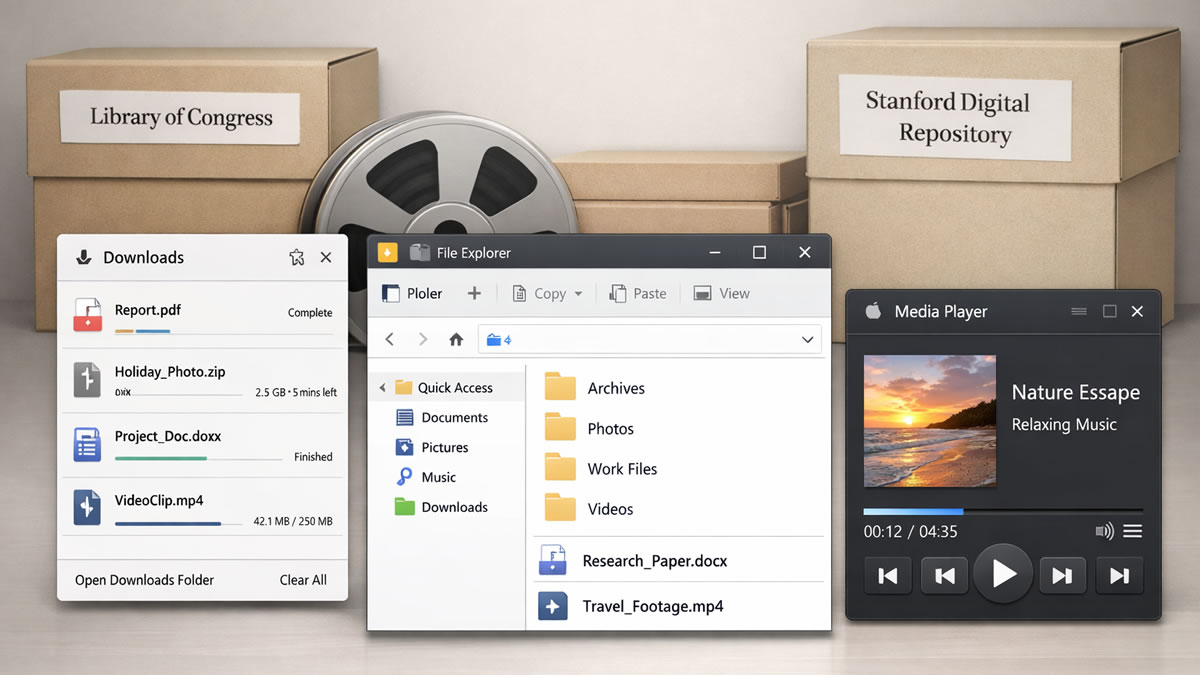
Large institutions that preserve knowledge already know how important control can be. The Library of Congress's digital preservation department focuses on the long life of digital content. The Stanford Digital Repository supports materials that need to stay reliable and readable decades into the future. Their work shows that file control has value beyond personal preference. It is tied to how knowledge remains accessible across time, formats, and systems.
Is Downloading Returning?
Downloading never disappeared. It simply moved into the background. Now it is blending with streaming, rather than replacing it. People stream when they want something fast and temporary. They download when the file matters and when they want something they can hold onto. Guides such as AllinOneDownloader's explanation of video downloading illustrates this balance by showing that users collect files for many purposes.
Conclusion
Controlling files does not require technical training. It asks for awareness and intention. When someone knows what they save, why they save it, and how to retrieve it later, they gain a level of digital independence that platforms cannot replace. As more services make access feel temporary, personal file management is turning into a genuine digital skill. It is practical, adaptable, and increasingly valuable in an internet shaped by subscriptions, shifting rules, and disappearing content.